|
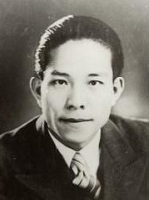
Bunya Koh (Wen-Ye Jiang) |
|
Koh was born in Tan-Shui, Taiwan, a Japanese territory at the time, which made his nationality Japanese, though he was born to Chinese parents. He attended school in Nagano, Japan and then majored in electrical engineering at the Tokyo Engineering and Commerce Advanced School (currently the Musashi Institute of Technology). He simultaneously attended evening classes at the Tokyo Music School (currently part of the Tokyo National University of Fine Arts and Music).
He started a career as a singer, and one notable job was as a member of the Opera Company, led by one of Japan’s most foremost opera singers, Yoshie Fujiwara. During this time period, he also started studying composition under two prominent composers, Kosaku Yamada and Kunihiko Hashimoto. Koh earned an honorable mention for his orchestral work, Formosan Dance, after submitting it to the Art Competition at the Berlin Summer Olympics in 1936.
After World War II, Koh returned to Communist China, stripped of his nationality and considered a traitor. He had to change his composition style to be more moderate in accordance with the ruling party, and he was a political target because of his earlier ties to Japan. His honor was restored in 1978, and he died in Beijing in 1983.
|
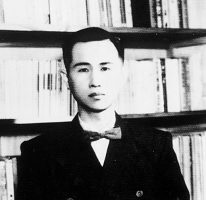
Chih-Yuan Kuo |
|
Kuo returned to Taiwan in 1946. In the 1950s, Kuo entered many music contests and won various awards; he also wrote compositions that were accepted by music magazines. He received his big break in 1955 when the National Taiwan Symphony Orchestra, then known as the Taiwan Provincial Symphony, performed his Taiwan Folk Symphonic Variations in Taipei.
1973 saw the beginning of the most prodigious phase of Kuo’s musical career. One of his major works from that period was the Concertino for Piano and String Orchestra. When it premiered in 1974 in Taichung City, it was the first piano and string sonata written by a Taiwanese composer to be performed in Taiwan. Over a decade later, Kuo composed the music for the script of Xu Xian and Madam Bai (The White Snake), the first original opera serial to be written by a Taiwanese composer.
He has won several awards for his compositions, including the Executive Yuan Cultural Award in 2006, which is a lifetime achievement award for enhancing and promoting music in Taiwan. He offered this summary of his approach to music when delivering his acceptance speech for the National Award for Arts in the same year. "Traditional Taiwanese folk music has become the major material I work with,” he said. “It has shaped the style of my modern Taiwanese ethnic musical works. I want to write modern, Taiwanese-style works that can be enjoyed by audiences. It's all that I live for."
|
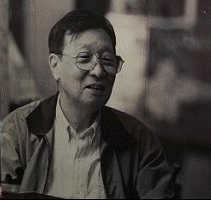
Yen Lu |
|
Lu attended several universities, including the National Taiwan Normal University, Mannes College of Music (New York.), the City University of New York, and the University of Pennsylvania. He received Taiwan's National Cultural Award in 1993 and 1998. Lu was a pupil of William Jay Sydeman, Mario Davidovsky, George Rochberg, and George Crumb; he was well known for his atonal compositions that displayed his counterpoint skills. George Rochberg noted that Lu's music "has a unique scent". In his article "My Artistic Journey" Lu stated that he wanted to write "music praising Mother Nature's great beauty and powers."
Lu was extremely prolific from 1967-2008. During that timeframe, he wrote 6 solo instrumental works, 70+ chamber ensemble works (excluding art songs), 5 Chinese chamber works, 16 orchestral works, 1 Chinese orchestra piece, and 11 art songs. Throughout these pieces, there has been a repeated theme of the sound of a bell, which Lu remembered from his childhood life in Jiangnan (on the southern bank of the Yangtze River) of China.
Two biographies about him were published in Taiwan. Yen Lu: A Cold Fire of Music,written by Taiwanese poet, Chen Li, in 1997, and A Poetic Journey of Nostalgia, by Canadian-Taiwanese composer, Shyh-ji Chew, and Taiwanese composer, Janet Jieru Chen in, 2004. Both biographies were published by Taiwan's China Times Publishing Co.
|
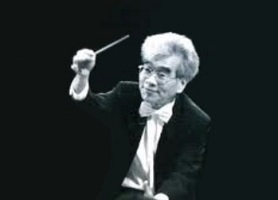
Sung-Jen Hsu |
|
Hsu studied philosophy at the Taiwan National University from 1962-1966, which included theories and composition. With a scholarship from DAAD (The German Academic Exchange Service), he completed his courses in conducting, piano, and composition at the Musikhochschule in Cologne (The Cologne University of Music, 1968-1974).
He worked at opera houses in Dortmund and Karlsruhe for two years before returning home in 1976. Once back to Taiwan, he became the conductor of the Taipei City Orchestra. He was a conductor and a professor for the music department of the Taipei National University of the Arts and had been since its founding in 1983. He was involved in music all his life and uses music to express his emotions concerning different experiences.
His main works include piano solos, a a sonata for violin and piano, a concerto capriccioso for orchestra, piano concertos and a piano trio, "Folksongs". He’s also an author of books on music aesthetics, instrumentation, and performance practices.
|
Tyzen Hsiao |
|
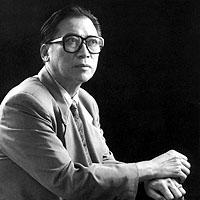
Hsiao's is sometimes referred to as the Taiwanese Rachmaninov because he has a similar tonal style to the latter. His portfolios include solo works for both instruments and voice, chamber ensembles, and epic pieces for choirs and orchestras with featured soloists.
Hsiao's art songs are frequently performed in his homeland. Many Taiwanese consider his folk anthem/revival hymn 'Taiwan the Formosa' to be Taiwan's unofficial national anthem. .He acknowledges Rachmaninov, Bartók and Chopin as influential to his compositional style, along with the Presbyterian hymnody; Taiwanese folk music, however, is the biggest influence of all on his music.. His songs are a seamless blend of folk songs and romantic melodies.
Hsiao's unique style has influenced a new generation of Taiwanese composers who will hopefully do the same for the next.
|
Ching-Wen Chao |
|
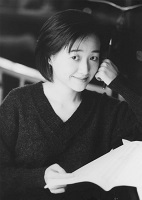
In 2004, she had a premier for her piano composition at the Dresdner Tage Fuer zeitgenoessische Musik. She’s won several awards, including first place in the 2003 Fanfare Composition Competition sponsored by the National Symphony Orchestra in Taiwan in honor of its 16th anniversary; the fellowship recipient of the Chiang-Ching Kuo Foundation Fellowship in Humanities, 2001 – 02; First Prize in the Young Composers Competition of the Asian Composers League; and First Prize in the Music Taipei Composition Competition in Taipei. Recently, she has collaborated with several internationally-acclaimed new-music ensembles such as the Taiwan National Symphony Orchestra, the Arditti String Quartet, the St. Lawrence String Quartet, and the California EAR Unit. She has also worked with members of the Ju Percussion Ensemble, members of the Eighth Blackbird, and members of the CALARTS ensemble. Her pieces have been performed around the world (Taiwan, America, Indonesia, Canada, and other countries) in music festivals and electronic music centers.
|
Chia-Yu Hsu |
|
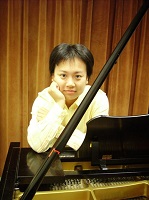
Hsu composes contemporary concert music and is also a researcher. Her main interest as a researcher is Asian composers with a specific focus on the concept of cultural fusion. She studies a variety of styles that blend Chinese and Western music to form a completely new music style. As a composer, she divines inspirations from various literature and arts, including myths, poems, and images. As with her research, however, her composition is noted for its blending of Western and Eastern sensibilities.
Hsu’s music has garnered her several awards, including the Morton Gould Young Composer Award from ASCAP, recognition from the Copland House and the KH Tan Competition, to name a few. Her orchestral compositions and chamber works have been performed all around the world by several distinguished companies, including the London Sinfonietta, the Aspen Music Festival Contemporary Ensemble, and the Cabrillo Festival Orchestra.
|
Wei-Chih Liu |

|
Liu draws from a variety of influences, including his avant-garde contemporaries as well as more traditional Eastern and Western composers. Even pop culture has had an effect on composition style, giving his music textures and making its sound lively.
He has written works for many local performance groups, including Chai Found Music, Forum Music, the Ju Percussion Group, and the International Society for Contemporary Music in Taiwan. He has also received accolades in the Chai Found “Wu-Xing” Composition Competition (2009) and the Taiwan Music Center International Composition Competition (2011) as well as first place in the Chai Found Composition Competition (2012).